Dated 2026-10-07. Recent randomized and guideline-based reports describe structured tele‑rehabilitation programs that combine scheduled video visits with wearable motion sensors for adults with knee osteoarthritis [1 (opens in a new tab), 6 (opens in a new tab), 5 (opens in a new tab)]. An assessor-blinded randomized controlled trial reported in 2026 found that a tele‑rehabilitation program using video visits plus wearable sensors achieved pain and function outcomes comparable to conventional face‑to‑face physiotherapy in adults with knee osteoarthritis when delivered as a supervised, protocolized plan with trained clinicians and standardized assessments [1 (opens in a new tab)]. This article summarizes what that and related research mean for a responsible pain‑clinic discussion, key safety points for home‑based participation, and practical preparation and tracking steps—without offering exercise prescriptions here.
What the latest randomized evidence suggests about tele‑rehabilitation with wearables for knee osteoarthritis
The 2026 assessor-blinded randomized trial compared a supervised, sensor-supported tele‑rehabilitation program with in‑person physiotherapy and found comparable improvements in pain and function between groups. Participants met by video with their clinician, used wearable motion sensors for feedback and monitoring, and followed a standardized program; independent assessors who did not know group assignment evaluated outcomes to lower measurement bias [1 (opens in a new tab)].
Additional randomized work has examined sensor-augmented telerehabilitation that measures neuromuscular performance, functional capacity, and psychosocial outcomes in knee osteoarthritis. These trials help clarify which domains may change with remote, sensor-informed supervision and support structured home participation when appropriate [2 (opens in a new tab)].
A systematic review and meta-analysis of telerehabilitation strategies for knee osteoarthritis concluded that remotely delivered programs can improve pain and physical function compared with control conditions, though intervention components and comparator types varied across studies. The authors noted heterogeneity in technologies and protocols, which matters when interpreting generalizability to specific clinics and patients [5 (opens in a new tab)].
Mechanistically, sensor-guided feedback can influence movement patterns linked to knee loading. In one randomized trial, sensor-based gait retraining reduced the knee adduction moment and improved symptoms in people with knee osteoarthritis, showing that real-time feedback can alter biomechanics in ways that may relate to pain and function. This trial focused on gait retraining rather than a full tele‑rehabilitation package, so its findings complement but do not replace program-level evidence [4 (opens in a new tab)].
When tele‑rehab may be reasonable to discuss—and when in‑person visits may be preferred
Clinical practice guidance for telerehabilitation emphasizes that patient selection, environment safety, technology access, and clear communication plans determine whether remote care is appropriate. Hybrid models that combine in-person and remote sessions are common, and clinicians are advised to decide case by case which visit type supports safe, effective participation and monitoring [6 (opens in a new tab)].
In-person evaluation may be preferred when hands-on examination is needed to clarify findings, when the home environment cannot be made safe for movement tasks, when technology barriers limit meaningful interaction, or when urgent concerns require direct assessment. Tele‑rehabilitation programs should include pathways to transition participants to in-person care if clinical needs change [6 (opens in a new tab)].
Safety points for wearable‑supported, at‑home sessions
- Confirm a clear, well-lit space with stable flooring and remove tripping hazards; have a chair or surface for balance support if advised by your clinician, and keep required devices within easy reach [6 (opens in a new tab)].
- Understand how to put on and remove any motion sensors, confirm a comfortable fit, and report device problems to your care team [6 (opens in a new tab)].
- Agree in advance on how to pause or stop an activity during a video visit if you feel unsteady or unwell, and establish a plan with the clinician for technical failures or urgent concerns during a session [6 (opens in a new tab)].
- Know that some software functions that analyze sensor data and generate diagnostic or treatment recommendations may fall under FDA oversight as medical devices, while general wellness features may not. Your care team can clarify which functions are being used and how data are handled [3 (opens in a new tab)].
- If program or medication adjustments are being considered, the plan should be clinician-led; do not change medications on your own, and coordinate any changes with the prescribing clinician.
Preparing for a pain‑clinic visit about tele‑rehabilitation for knee osteoarthritis
A productive discussion at CMS Pain Management & Rehab starts with practical information you bring. Telerehabilitation discussions benefit when goals are clear, home logistics are known, and progress can be tracked consistently over time. The following preparation topics align with telerehabilitation practice guidance for safety, documentation, and outcomes monitoring [6 (opens in a new tab)].
- Your goals and everyday tasks: List two to three activities you want to do more comfortably or more often, such as getting out of a chair, climbing stairs, or walking a certain distance. Be as concrete as possible so progress can be revisited in later visits [6 (opens in a new tab)].
- A simple, consistent pain record: Use the same short pain scale your clinic uses at visits; jot down how pain feels at rest, during activity, and later that day. Consistency helps your team interpret changes over time during remote care [6 (opens in a new tab)].
- Function snapshots: Brief notes on walking tolerance, stair use, sit-to-stand repetitions, or time on feet can give a meaningful picture between visits without requiring complex testing [6 (opens in a new tab)].
- Home participation log: Record dates and approximate durations of any assigned practice and whether tasks felt easier, the same, or harder. Accurate adherence notes help your clinician tune progression remotely [6 (opens in a new tab)].
- Technology and space checklist: Note your available device for video calls, internet reliability, camera position options, and the size and setup of your movement space. Share any concerns about privacy or data use so they can be addressed before starting [6 (opens in a new tab), 3 (opens in a new tab)].
- Terms you may encounter: You may hear about brief patient-reported tools for tracking personal activities or simple numeric pain ratings used at clinic visits; your clinician can explain which measures they use and why these choices fit your situation [6 (opens in a new tab)].
How progress can be tracked without offering exercise prescriptions here
In supervised tele‑rehabilitation, progress is typically tracked with brief patient-reported outcomes, observed task performance during video sessions, and sensor summaries such as repetitions or adherence markers. The clinical team interprets these data within your goals and safety constraints, and adjusts the plan accordingly during scheduled check-ins [6 (opens in a new tab)].
Between visits, your own notes about pain during daily tasks, perceived exertion, and recovery by the next day can be as informative as device numbers. Report any sustained increase in symptoms, new instability, or concerns about the setup so the care team can re-evaluate the progression and visit format [6 (opens in a new tab)]. Decisions about changing a plan should be clinician-led; do not make independent changes to medications or the program without discussing them with your team and the prescribing clinician where applicable.
Limitations and uncertainties to weigh before choosing a format
Program elements, sensors, and coaching styles vary across studies, which limits direct comparison with any single clinic’s approach. The 2026 assessor-blinded trial supports comparability of outcomes between supervised tele‑rehabilitation with wearables and standard in‑person physiotherapy under structured conditions, but the results may not apply to all technologies, settings, or participant profiles [1 (opens in a new tab)].
Across trials and reviews, heterogeneity in devices, session frequency, and comparator treatments makes it difficult to declare one tele‑rehabilitation recipe superior; findings support the category rather than a specific product or app. Many studies follow participants for limited periods and enroll those able to use technology and to engage in scheduled sessions, which can limit generalizability to individuals with substantial comorbidities or access barriers [5 (opens in a new tab), 2 (opens in a new tab)].
Real-world home environments differ from controlled facilities; lighting, flooring, furniture, and distractions can influence safety and performance. Clinicians are advised to verify the environment, obtain informed consent, and have contingency plans for emergencies or technology failures as part of telerehabilitation practice standards [6 (opens in a new tab)].
Wearable sensors can assist monitoring and provide feedback, but they do not replace clinical judgment. Some software functions that interpret physiologic or movement data and generate clinical recommendations may be regulated, while general wellness tracking may not be; clinics should clarify device roles, data stewardship, and privacy protections with participants [3 (opens in a new tab), 6 (opens in a new tab)].
Questions to bring to your CMS Pain Management & Rehab visit
- Given my goals and home setup, would you recommend in-person, tele‑rehabilitation, or a hybrid plan, and what would make you switch formats later? [6 (opens in a new tab)]
- Which outcomes will we track, how often will we review them together, and how should I record day-to-day changes between visits? [6 (opens in a new tab)]
- What wearable sensors or software functions are involved in your program, how is my data protected, and which parts are considered medical devices versus general wellness tools? [3 (opens in a new tab)]
- How will you verify that my home environment is safe for planned activities, and what is our plan for technology problems or urgent concerns during a session? [6 (opens in a new tab)]
- What should I communicate if a flare, fatigue, or sleep disruption follows a session, and how do you decide on pacing or progression remotely? [6 (opens in a new tab)]
How CMS Pain Management & Rehab uses this evidence in a rehabilitation‑first discussion
Our rehabilitation team reviews randomized trials, systematic reviews, and practice guidelines to inform individualized, function-focused plans. Evidence supporting supervised, wearable‑assisted tele‑rehabilitation as comparable to standard in‑person physiotherapy in selected adults with knee osteoarthritis expands format options without changing core principles: set clear goals, monitor consistently, prioritize safety, and adapt the plan in collaboration with your clinicians [1 (opens in a new tab), 5 (opens in a new tab), 6 (opens in a new tab)]. At your visit, we can discuss whether in‑person, remote, or hybrid sessions fit your needs and resources. If medication changes are under consideration, decisions are coordinated with the prescribing clinician.
Frequently asked questions
Is supervised tele‑rehabilitation with wearable sensors as effective as in‑person physical therapy for knee osteoarthritis?
An assessor-blinded randomized controlled trial reported in 2026 found that a supervised program combining video visits with wearable sensors achieved pain and function outcomes comparable to conventional face-to-face physiotherapy for adults with knee osteoarthritis when delivered under structured conditions [1 (opens in a new tab)]. A meta-analysis likewise reported that various telerehabilitation strategies can improve pain and physical function compared with control conditions, though interventions differed across studies [5 (opens in a new tab)].
What kinds of wearables are used in knee osteoarthritis tele‑rehab, and are they regulated?
Clinics may use inertial measurement units or similar motion sensors to track movement or repetitions and to provide feedback during supervised sessions. Some software functions that analyze sensor data and provide diagnostic or treatment recommendations are considered medical devices and may fall under FDA oversight, while general wellness tracking features may not. Clinics should explain which functions they use and how your information is protected [3 (opens in a new tab), 6 (opens in a new tab)].
Can gait retraining be part of a remote program for knee osteoarthritis?
Sensor-guided gait retraining has lowered the knee adduction moment and improved symptoms in a randomized trial, showing that real-time movement feedback can change biomechanics relevant to knee loading. Whether gait retraining is included in your plan depends on your evaluation and the program’s design; clinicians determine fit and safety and may blend in-person and remote elements [4 (opens in a new tab), 6 (opens in a new tab)].
What if I do not have much space or reliable internet—can I still participate in tele‑rehab?
Telerehabilitation practice guidance encourages clinicians to assess technology access, home environment safety, and communication reliability before recommending remote care. If video quality, space, or privacy are insufficient, a clinic can offer in-person or hybrid options and revisit tele‑rehab later if circumstances change [6 (opens in a new tab)].
Sources
- An assessor-blinded randomized controlled trial comparing a tele-rehabilitation program with wearable technology to conventional face-to-face physiotherapy in patients with knee osteoarthritis - PubMed (opens in a new tab)
- A Sensor-Augmented Telerehabilitation System for Knee Osteoarthritis: A Randomized Controlled Trial of Neuromuscular, Functional, and Psychosocial Outcomes - PubMed (opens in a new tab)
- Examples of Device Software Functions the FDA Regulates | FDA (opens in a new tab)
- Sensor-Based Gait Retraining Lowers Knee Adduction Moment and Improves Symptoms in Patients with Knee Osteoarthritis: A Randomized Controlled Trial - PMC (opens in a new tab)
- Effectiveness of Different Telerehabilitation Strategies on Pain and Physical Function in Patients With Knee Osteoarthritis: Systematic Review and Meta-Analysis - PMC (opens in a new tab)
- Telerehabilitation in Physical Therapist Practice: A Clinical Practice Guideline From the American Physical Therapy Association - PMC (opens in a new tab)
When to Talk With a Clinician
For non-emergency questions, contact CMS Pain Management & Rehab to discuss your symptoms and care options with a qualified clinician. For emergency warning signs, call 911 or seek emergency care now rather than contacting the clinic.
Medical disclaimer: This article is for general education and is not a diagnosis or a substitute for individualized medical advice. Treatment options, risks, and eligibility vary; consult a qualified healthcare professional.
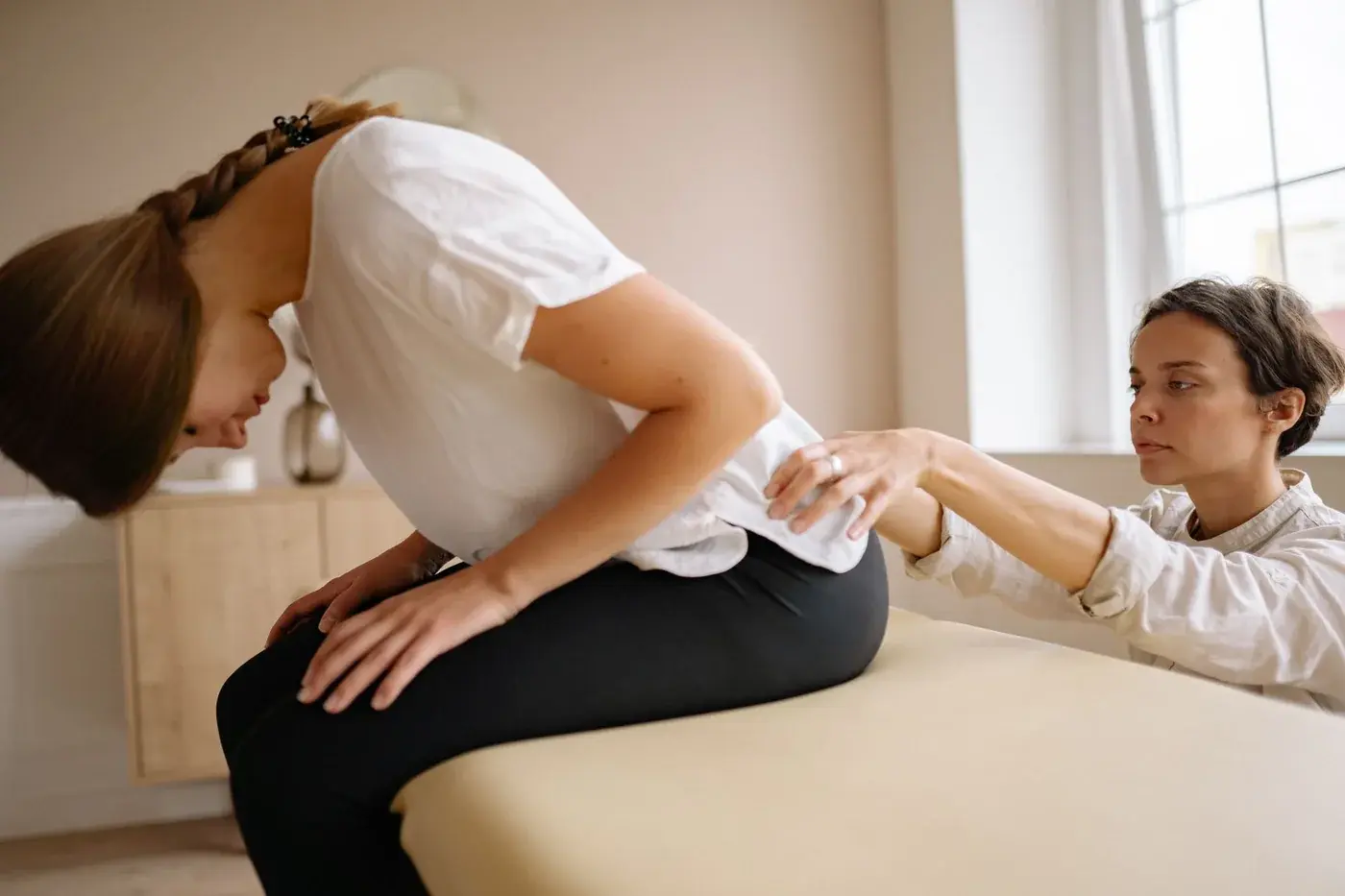
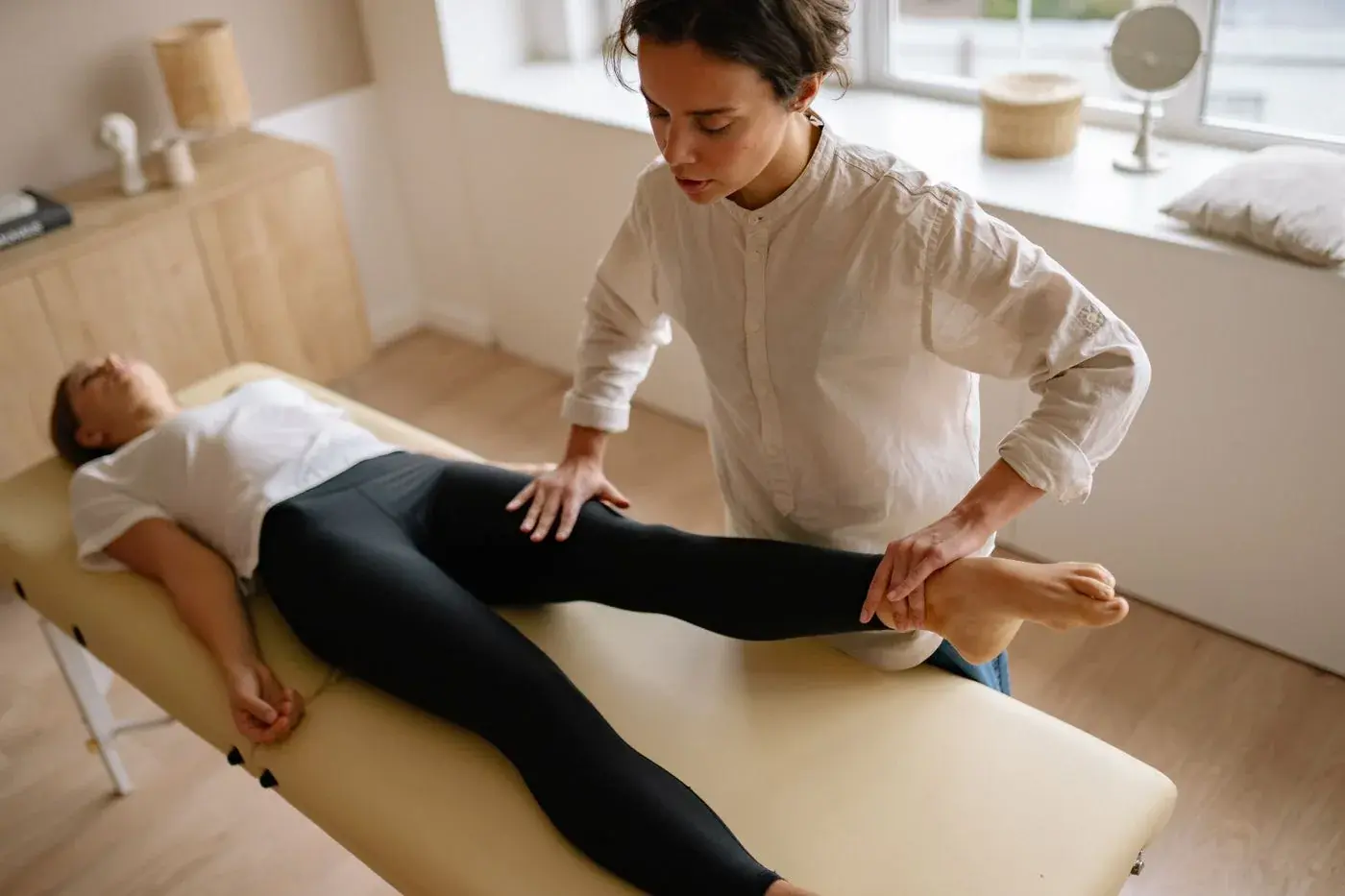
This article provides general information and is not an individual diagnosis or treatment recommendation. Ask your clinician how the information relates to your health. The accompanying stock photograph is illustrative.
Originally published Oct 7, 2026. Last updated Oct 7, 2026.